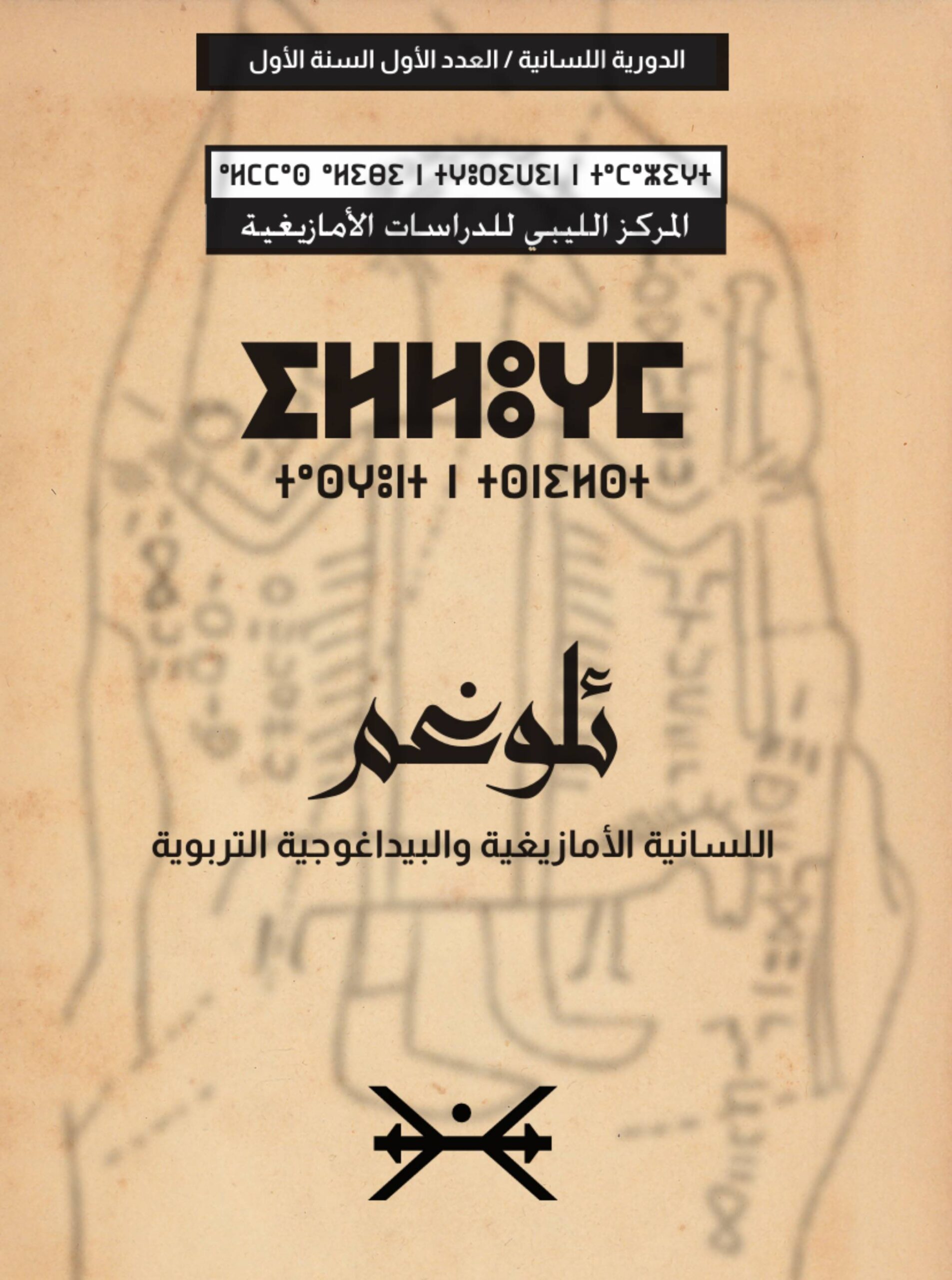
Summary of the Journal’s Contents
This scientific linguistic journal, published by the Libyan Center for Amazigh Studies, addresses a range of pivotal issues related to the Amazigh language within an academic framework that combines theoretical research with applied analysis. This issue is part of an effort to consolidate Amazigh linguistic studies within the scientific field, linking them to questions of linguistic history, structural description, and language planning, while addressing contemporary educational and technical challenges.
The issue includes studies in linguistic and lexical history, most notably research on the Amazigh numeral system, examining its origins, structure, and comparison with global numerical systems, while highlighting the cognitive and anthropological specificities it reflects. Other articles address phonological and morphological issues by analyzing phonetic and morphological phenomena in various Amazigh varieties, utilizing modern linguistic tools and grounding them in field data.
Regarding the standardization of the Amazigh language, the issue discusses the methodological and scientific foundations for corpus planning, using the common trunk shared between varieties as a starting point, and regulating orthographic and lexical choices. These studies present the challenges facing the transition of Amazigh from an oral status to a language of writing, education, and institutions, emphasizing the role of linguists in guiding this process on solid scientific grounds.
The issue also pays special attention to educational linguistics through a critical analysis of Amazigh textbooks in Libya, studying the phenomena of omission and simplification and their impact on the representation of regional varieties. These theoretical approaches are accompanied by a practical guide for teachers, offering clear pedagogical steps to improve Amazigh teaching in primary education according to modern educational standards.
The issue concludes with comparative and applied studies, including an in-depth analysis of the Amazigh variety of Yefren based on the Swadesh list, alongside articles in linguistics and technology that discuss the problematic nature of the Tifinagh keyboard and its redesign according to a functional linguistic logic. Overall, this issue seeks to contribute to the development of Amazigh linguistic research and to bridge academic knowledge with issues of education and digital modernization.