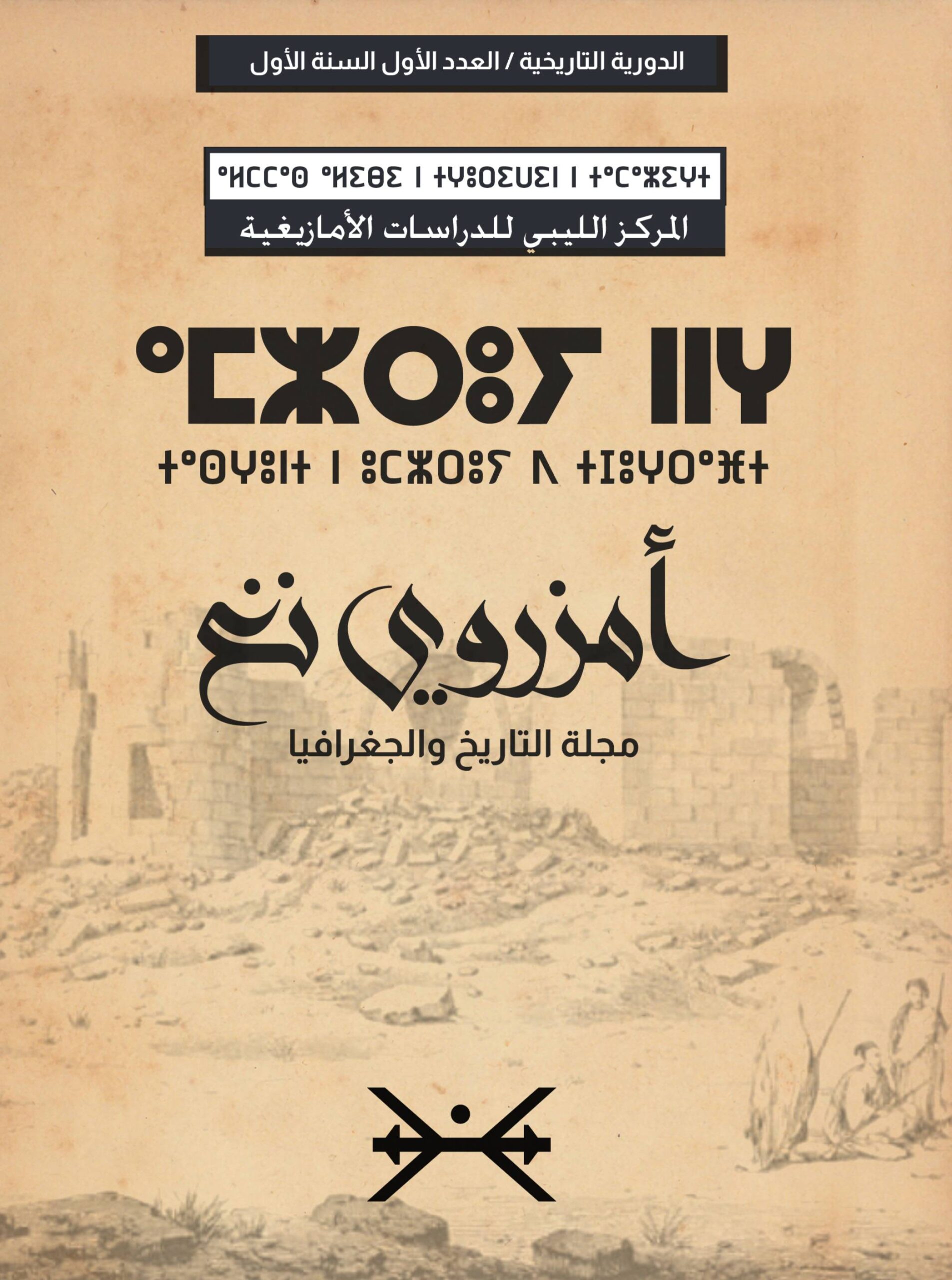
Summary of the Journal’s Contents
This academic journal presents a collection of peer-reviewed studies and research addressing Libyan history in its multiple dimensions through historical, archaeological, documentary, and cultural approaches. It seeks to re-examine the Libyan past through a critical scientific lens, grounded in primary sources and rigorous methodological analysis, while avoiding mere descriptive narrative or reductionist simplification.
The issue includes research on ancient, medieval, and modern history, covering issues of settlement, authority, society, economy, and the political and cultural transformations Libya has undergone throughout the ages. It focuses on the local actor and their role in shaping historical events, while linking facts to broader regional and Mediterranean contexts.
The journal also encompasses studies in archaeology and urban history, relying on material evidence, epigraphy, and field data. It highlights the importance of interpreting archaeological artifacts within their chronological and cultural contexts, contributing to a deeper understanding of the evolution of Libyan cities and societies, as well as modes of living, production, and social organization.
Furthermore, the issue contains research on documents, manuscripts, and oral history, addressing the value of non-traditional sources in historiography. It discusses methodologies for their collection, verification, and critique, regarding them as essential elements for completing the historical picture and restoring the status of local and societal memory.
The issue concludes with evaluative articles and scientific reviews highlighting recent publications in the field of Libyan studies, alongside methodological approaches to historiography. These emphasize the importance of multidisciplinary perspectives and interdisciplinary integration in constructing a balanced, scientific historical narrative that contributes to consolidating awareness of national history and Libyan cultural identity.